
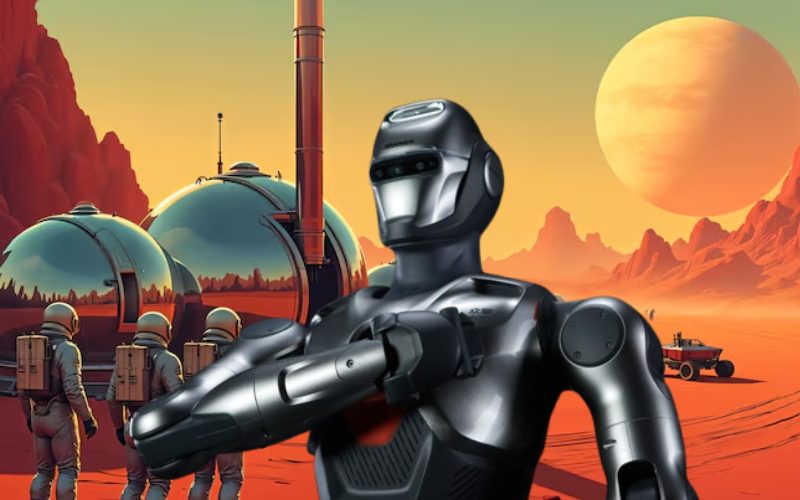
The Future Has a Face: A New Era of Space Travel
Imagine a crew member who never tires, requires no oxygen, and can patch a hull breach in the silent, freezing vacuum of the cosmos without hesitation. This isn’t a recycled plot from a Hollywood blockbuster; it is the current reality of China’s space robotics. In a move that feels like a leap into the next century, Shenzhen-based developers EngineAI have partnered with commercial giant Interstellar to launch the world’s first humanoid robot astronaut program.
“This isn’t just about building a better tool; it’s about building a better explorer.”
Why the PM01 Changes Everything
At the center of this technological storm is the EngineAI PM01. This isn’t just a hunk of metal; it’s a sophisticated entity designed to perceive and react with human-like intuition but mechanical precision. Built with high-precision sensors and millisecond-level response times, the PM01 is engineered to thrive in the harsh environments where biological frailty becomes a liability.
This specific AI robot space mission aims to deploy these units into orbit, marking a massive shift in how we approach the future of space exploration. By integrating “embodied intelligence,” these robots don’t just follow code—they learn to interact with their surroundings.
The Advantage of the Human Form
One might wonder: why a humanoid? While rovers are great for dirt, the humanoid robot astronaut is designed to operate within environments built by humans, for humans. The benefits are clear:
- Precision Maintenance: They can use the same tools and interfaces as their human counterparts.
- Risk Mitigation: They handle high-risk external inspections, keeping the biological crew safe inside.
- Operational Efficiency: Robots don’t need pressurized living quarters or food, drastically cutting mission overhead.
“This move positions China as a serious leader in AI-led space innovation. If successful, humanoid robots could become standard crew members handling maintenance, emergencies, and even construction in orbit.”
Final words: A Stellar Handshake
As we look toward the horizon, this initiative positions China’s space robotics at the forefront of AI-led innovation. The PM01 isn’t just a tool; it’s a pioneer. By bridging the gap between advanced silicon and the vastness of the stars, we are ensuring that when humanity finally reaches the deepest corners of the galaxy, our best technology will already be there to welcome us.
