
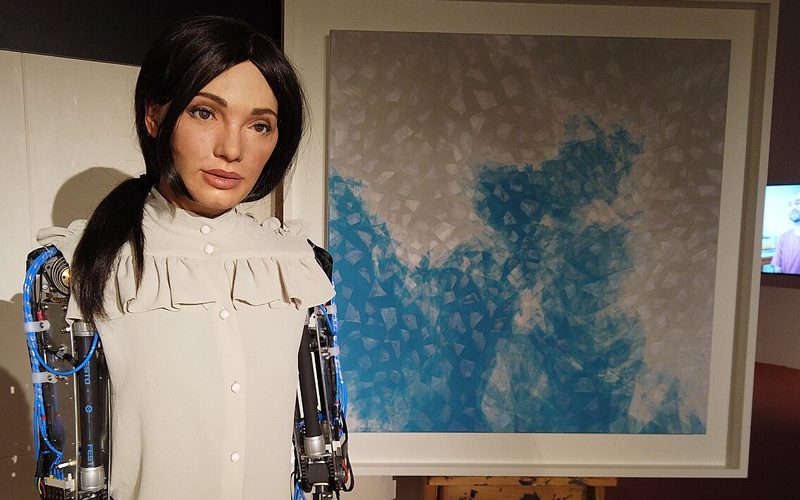
We’ve all seen AI write emails and generate funky art, but would you trust a robot to design the house you live in? Specifically, a house on Mars?
The Utzon Center Denmark exhibition has become the global stage for an unprecedented fusion of AI, architecture, design, and creative tech. On 8 January, the world’s first ultra-realistic humanoid robot artist Ai-Da unveiled her modular “Space Pod” concept.
“AI architecture design isn’t just about aesthetics, it’s about how intelligent systems can sense and adapt to human life,” said Ai-Da’s creator, Aidan Meller.
How a Robot Designs a Home
Watching Ai-Da work is a bit of a trip. She doesn’t just “output” data. Using the cameras in her eyes and complex algorithms, she perceives the world and translates those observations into physical sketches using her robotic arm.
Aidan Meller describes her as a “mirror.” She isn’t here to replace architects, but to reflect how human-AI collaboration can push design boundaries we haven’t even thought of yet. In this case, she’s dreaming up modular habitats, essentially high-tech LEGO blocks for the Moon or Mars.
A Vision for Space and Earth Living
The Ai-Da Space Pod is designed as a modular habitat suitable for future lunar and Martian bases, but the concept is also grounded in earthly practicality. While the goal is to house astronauts for the upcoming 2027 crewed Moon landing, the AI architecture design principles used here actually have a lot of “Earthly” potential:
- Adaptability: Intelligent systems that respond to human needs in real-time.
- Efficiency: Structures designed to maximize space and resources in harsh environments.
- Modular Growth: Homes that can grow or shrink based on the population.
Why This Matters for the Future of Architecture
What makes this exhibition (running until October 2026) so special is the setting. Ai-Da’s futuristic pods are being showcased alongside the legendary designs of Jørn Utzon, the man who gave us the Sydney Opera House.
By putting a robot’s work next to a master of organic, human-centric design, the Utzon Center is forcing us to ask: Who gets to design our new worlds? As Ai-Da puts it, her work is about building a “positive relationship between humans and technology.” Whether we’re building in the suburbs or on the lunar surface, it’s clear that the algorithms of today are starting to lay the foundations for the homes of tomorrow.
